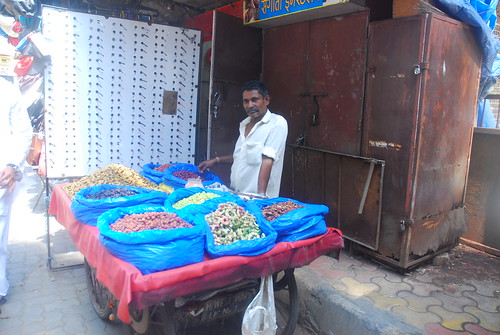
I have moved to the North until May to work on my second book on Uttaranchali cuisine. It was beautifully pleasant when I first got here but it’s getting hotter by the day. Afternoons are hottest, oppressive almost and often when the rest of the house is taking its afternoon siesta, I will be driven to the kitchen in search of something sour and spicy to eat. Sourness is cooling in hot weather perhaps because sweetness can be cloying and sleep inducing but an acid taste accentuated with some chilli and salt can invigorate you!
In Mumbai in the summer on these sort of days we would make our way to the corner kairiwalla. Their species is dwindling but you will still find them wherever girls and women congregate. And with two schools and two ladies hostels in the lane parallel to the one in which my mother’s house is situated, there is still one guy that makes his way slowly around the area, daily. His pushcart loaded with piles of sour temptations to make your mouth water; fruit and dried fruit you would never find in the supermarket or even all together in your local market – plump oval purple jamun or tiny purple phalsa, small green avla (starberries, also known as Otaheite gooseberry), large yellow-green amla (Indian gooseberries), the attractively shaped carambola (starfruit) and/or its close cousin the bilimbi, tamarind both plain and in sticky red syrup, bel (woodapple) and so much more. And green mango, which based on your choice could be green and super sour or just beginning to ripen, its flesh tinged with gold, and sweetness just beginning to bleed into its sourness, curiously, accentuating the sourness! He would slice it up into a paper cone, add a sprinkle of masalla and wrap it up for a drooling gaggle of girls. (Unfortunately I do not have a picture of the kairiwalla, I have been meaning to get one but not gotten down to going and clicking one just yet. But you can get a look see here http://farm5.static.flickr.com/4037/4390862891_97984f4b44.jpg)
Then one day I discovered the flavour of the Kairi wallas Kairi’s distilled into a bottle. In the form of my future Mother in Law’s Heeng ka Achar. (How portentous that was is a thought I often have!) It was the first thing made by her hand I ever tasted, and to date it remains my favourite of the huge repertoire of achaars she makes. The mangoes on our tree are just about ready to be made into Heeng Ka achaar and I am going to be making this years batch with my ma-in-law this week. Here are pictures from last year’s pickle making session. My Ma in law loves to do this pickle when I am in Dehra Dun because I am one of those cooks who can happily lose herself in hours of repetitive cutting that things like this pickle require. (Which is why chopping vegetables is often left to me at other times as well.)
Even now, when we are grown and married and my sister, Neha who shares my weakness for these goodies, and I are susceptible to the charms of the kairiwalla’s wares. On the rare occasions we are together at mom’s home, she will go and buy us an assortment of things, badgering the kairiwalla to give her an extra large helping of the spicy salt that comes with them and we will congregate over the scattering of newspaper bundles, feasting on the sourness of summer, zingy with salt and chilli!! Thinking of my siblings today and Summers of sour!
Heeng ka achar
Although it is called Heeng ka achaar, this is a green mango pickle made with green mangoes that are picked before their stones harden. That is not to belittle the role of Heeng in this pickle, for the magical quality it gets would be impossible without it. Its a simple pickle to make, but one of those marriages made in heaven. There are no substitutes for the Mango and the Heeng. No other sour fruit or vegetable would do. And without Heeng it would be a shadow of itself. And the quality of the heeng is really important. Heeng or asafoetida is a hard resinous gum, grayish-white when fresh, darkening with age to yellow, red and eventually brown. It is sold commonly as a fine yellow powder, sometimes crystalline or granulated but we use a solid form that is like lumps and far stronger than the commercial powder. It is also more expensive but so good that a little goes a phenomenally long way. It lasts more than a year, getting progressively better with age and goes with just about anything from khichdi and daal rice to mathri and parathas. And if you are feeling queasy, just nibble on a bit of this pickle and you will be ok!
Ingredients
2 kg raw mangoes-peeled and chopped
200-300g salt
1/2 c/ 75g chilli powder or to taste (mom uses a 1:1 mix of kashmiri chillis and spicy chillies from her garden.
A 5g lump of Asafoetida
Method
Cut your Mango into bitesized free form chunks. (You can reserve immature chunks to add to dals for delicious sourness.) Grind Heeng with salt and chilli powder. Place mango in a large steel bowl and add the spice mix a little at a time. You might not end up using it all. Aim to achieve a bright orangey red. And when you have this, taste the pickle, if it tastes right, stop mixing in spice mix. If not, add some more until you are happy with it. The great thing about this pickle is it tastes almost like it will on maturing at the mixing stage, the flavours only mellow with a little as the mangoes give forth their juices . When you are happy with your pickle transfer to a large glass jar and place in the sun for a few days, or just mature for a few days. I usually pick up the last bit in the bowl with the melting spice mix and settle down to savour it right away as my Ma in law cringes watching me (she can’t handle sour flavours)