
These days, when I am on a Masala trails through Grant rd. Market or
even if I am just passing through, I make it a point to walk past this one
vendor. He is a makaiwalla - corn seller and only one of two in the market that
sells indigenous Indian white corn. And whenever he has white corn, I buy up
all his stock. White corn has become the symbol of a changing food system for
me and eccentric as it may sound buying up all of this vendors stock has become
my personal way of “nazar uatro” ing or warding off the evil eye from Indian
food diversity. And every time I walk away with bags of corn I hope I have done
enough to keep white corn alive in that vendor’s farm for that day.

Makai ni Khichdi/Shaak was a breakfast dish I loved as a child, made
of fresh white corn grated off the cob and simmered with buttermilk and chillies
into a wonderfully savoury spicy textured porridge, studded with chunks of
golden potato, flecked with mustard and aromatic with curry leaves. I
particularly loved it on buttered white toast. And it can still bring me to my
knees in thanks. But as much as I loved it I never really noticed when
yellow corn replaced the white in this and other traditional recipes.
One day I was taking the Times of India team on a
tour of the market to show them Gujarati ingredients for a story when I spotted
white corn and stopped to buy some out of nostalgia. I was shocked to find that
it was twice the price of yellow sweet corn! On asking why, I found out that
this was because very few people grew it any more. Yellow corn was more in
demand and easier to grow. He only grew it because he still found takers in
this market in older Gujarati and Marathi consumers who still preferred to buy
white corn for traditional recipes and religious occasions.
On thinking about it, I realised that I like the
Makai ni khichdi of my childhood more, made with the less sweet white corn that
allows the other elements of the dish to come to the fore. Consuming and using
up the excess white corn is never a problem, boiling and keeping it in a box
makes it a convenient addition to anything from soups and salads to rice and
subzis. That day I also made a Spinach corn casserole with it.
Just after this incident, I travelled to Italy to
attend the biennial Slow Food convention, a biennial conference of the
international Slow Food movement. While I was wandering about in the Salone
Del Gusto, Safeguarding food biodiversity for the future is one of the
fundamental principles of the Slow Food association and the entire Terra Madre
network is engaged in defending local food in various ways. The Terra Madre
Conference happens on one side where all the real talking takes place and the
Salone Del Gusto takes place on the other side where producers of slow food
from all over Italy and the world showcase their food and sell it.
 |
| Baby Methi |
As I walked through the Salone Del Gusto, two
things caught my eye, stalls dedicated to corn cobs in various stunning colors
and lentils of different kinds. These, along with select cheeses, cured meats,
breads, sweets, vegetables, fruits, grains and honeys belonged to presidia
protected by Slow Foods Ark of Taste which is an international catalogue
of heritage foods in danger of extinction. How amazing to see all the wonderful
work people were doing to save food diversity around the world! And then I got
down to thinking about how much diversity we have in India. Mind Boggling! Thoughts
that were reiterated by my fellow delegates on the way home that night. The Slow Food Presidia are concrete examples
of a model for agriculture based on quality, the safeguarding of traditional
knowledge and sustainability.
I came back to India resolving to do what I could
about it. In my last post I wrote about Undhiyu and how I knew as a child that winter
had arrived when Undhiyu was served up. But to put things in proper perspective
Undhiyu was a very elaborate dish made a few times through the season. Winter
also brings many other dishes that are dependant on vegetables that came into
season at this time. I have been playing with all of these local ingredients
with some delicious results.
Green leafy vegetables at their most tender, baby
methi (fenugreek) I found that Baby Methi (very young fenugreek sprouts) used
to make bhajji in the Gujarati and Maharasthrian communities, is also great in
a mesclun salad (a gourmet trend abroad) and as a stuffing for Vietnamese style
Rice paper rolls or as a crunchy topping for soups. Fresh green Bhavnagri
chillies make a great salsa, when roasted and ground with garlic, fresh
turmeric and mango ginger pickle is great with Thai Curry, green and red mogris
(rat tail radish are so perfect lightly stirfried and tossed with noodles and
peanuts. Dill (Suva, Shepu) eaten by Gujaratis as well as Maharashtrians as a
vegetable and in dals is lovely in yoghurt based dishes with cucumbers, or added
to salads and soupds and also lovely in lemony fried rice. Green peppercorns that
come into season in the winter and are pickled by the Gujarati/South Indian
communities, I use the fresh ones for an addictive pesto,
pepper vodka, Lamb stuffing and can also candy them into
peppery toppings for desserts. Green Fennel (Saunf) that is dried to make
tradtitional Mukhwas is a an exciting touch in salads, or to flavour light
seafood dishes.

The Indian word for Kitchen “Rasoi” is rooted in
the word “Rasa”. While transation dilutes it’s meaning, since “rasa” is “juice”
juice in this case has a larger meaning, it is that quintessential flow of
flavors that comes only from slow, deliberate cooking that follows the organic
rhythm of nature. The Rasoi then becomes that special, sacred place in the home
where these juices flow producing profound pleasure. The Gastronomic
Imperialism of fast food chains is a fly-by-night phenomenon in India.
Indians are linked to their tastes and culinary traditions in a very elemental
way, and the low-quality food produced by fast food chains is no match for our
rich food heritage. Indian food is slow food, traditional practices of
food preparation and cooking meet the manifesto of slow food. Indian food, with
its diversity fits the bill perfectly with every region in India having its own
unique cuisine.

Food is needed by everyone, everywhere, everyday; a
small change in the way it is produced and marketed will have a great effect on
health, the ecosystem and preservation of cultural diversity. Local food (also
regional food) is a principle of sustainability relying on consumption of food
products that are locally grown. It is part of the concept of local purchasing;
a preference to buy locally produced goods and services. Shopping
decisions favouring local food consumption directly affect the well-being of local
food producers, improve local economies may prove to be ecologically more
sustainable. You do not have to give up all food coming from other sources,
just favour local foods when available. Support your eco system by buying
local produce and supporting local farmers and food producers.
Mumbai and India are standing on the brink of a
boom in food in every related business. But we need to strike a balance.
Embrace the new but hold on to the old.
And we can start to do this is by
celebrating Terra
Madre Day is
on December 10. Terra Madre Day is an annual event celebrated on December 10
every year by the Slow Food network around the world. The objective of this day
is to underline the importance of eating locally. Activities to celebrate Terra Madre Day take place
all over the world: in cities, rural areas, schools and community centers, cinemas
or on farms, restaurants or at home. This year the Mumbai food bloggers
community Come together to spread the message of
Terra Madre Day across India., anyone who shares the Slow Food's
philosophy, is welcome to participate. Spread the
word amongst your circle of friends, speak to people you know in the food
industry or simply mark the day by serving local foods, cooking up traditional
recipes and promoting better food systems to your friends family and loved ones
through the days of 9-19 of December. This is a very special
celebration. That of food. Your food, my food, global food. You do not need to
pay anything, you do not need to leave your house. All you need to do is cook
local seasonal, regional, traditional foods because the only way to keep
traditional foods alive is by cooking them.
COMPETITION
Share what you are
doing for Terra Madre Day in India with me in the comments of this post on A Perfect Bite. I
would love to be part of your celebrations as well. The best entry will WIN
an organic hamper from Navdanya and a selection of favourite cookbooks from me! |
| Moolies and Radishes |
 |
| White Corne and yellow corn |
 |
| The purple stringy things are Lal Mogri or Rat Tail Raddish |
 |
| ANd thesse are Green Mogri |
 |
| Lots of different eggplants that were under the GM threat from BT brinjal |
 |
| White Corn and Spinach |
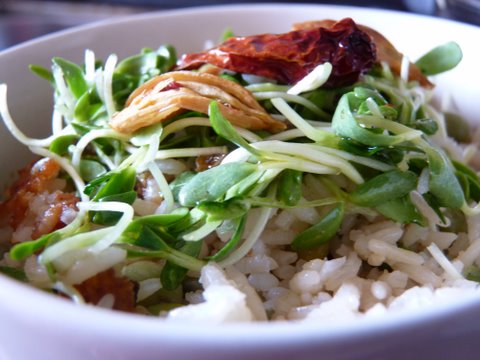 |
| Turdana Risi e Bisi with Methi Mesclun and Roasted chilli garlic oil |
 |
| Water Chestnut Green Thai curry |
 |
| Mayalyu Daal |
 |
| Garhwali Paturis made with seasonal greens. |


