Adding your personality to your kitchen doesn't require too much money or time but it does require a fair amount you!
I have been slowly settling into my new house. Getting to know my new kitchen. It just about getting to feel… comfortable. Like a new pair of jeans that need an acid wash to feel lived in, I feel like it needs more... more than the functional aspect of equipment etc. I realised when we were setting up the studio, that for all the effort that we put into personalizing the rest of our home, we rarely take the time to focus on decorating the kitchen! It is after all, central to any home, a meeting place for families to come together and share food, fun, joys, woes, love and laughter. Why leave it to feel utilitarian, cool... sterile? Why not put in a little effort to make it perfect? And the best part is, you don't need to move into a new home to do this, you can do up or redo your existing kitchen, RIGHT NOW!

 I usually begin with a theme, a unifying idea that is a recurrent element. It could be as simple as a colour or a color palate. With the studio we wanted a feeling of cosy, so we chose wood, opaque glass and wrought iron. It looks lovely as it is but also allows for additional decor to match a variety of themes. But a home kitchen allows for something more characteristic of the cook or the people in it? Depending on your bent of mind you could choose to go retro, modern, avant garde... Your theme could revolve around a cuisine or you could even pick an ingredient - fruit and vegetables can be very colourful.. spices or nuts offer muted monochromatic themes. A favourite drink or food you love, coffee, chocolate, beer, olives, candy… just look around you, something will strike a chord! Carry your choice of theme into different aspects of your kitchen. In the first home we owned, I had gone with an Italian cafe theme, with cafe style chairs and a daily specials board and all. This time I am seriously thinking of chillies as a theme.
 Your walls can do more than hold up the roof. Walls are an empty canvas waiting to be filled.... Pictures offer the easiest wall art and there are a myriad ways to get some. Retro advertisements for cooking ingredients, framed prints of food and ingredients, old botanical drawings of cooking plants offer interesting options. Look for old botanical textbooks and magazines at second hand bookstores, tear pages out and frame. Photos, in collages or individually framed and hung on blank wall space are my favourite way to dress up walls. Blue china plates can add bright contrast to drab white walls, mounted in clusters, or rows above a window or down the side of a cabinet. Old kitchen ware can be attractive on top of a cupboard or windowsill and infuse a touch of cosyness that only old things can. Use collections of postcards, match boxes, coasters, or stirrers by creating collages and framing them for a wall.
 Make it a DIY project, get to work with your digital camera - take pictures of ingredients, the food you cook, your family and friends enjoying good food - and frame them, you could even add recipes alongside. Paint your own wall art. OR use favourite recipes as wall paper! Print recipes out onto translucent paper or cut interesting recipes out of magazines rub the reverse of each with a piece of sandpaper and paste to the wall. Seal by applying a coat of clear poly-acrylic paint with a broad paint brush. Ensure that if you are decorating around a theme, such as food, French café style or even wine, the images you hang on your wall are in keeping with the theme of your kitchen. I know framed foodles are going to be a BIG part of the decor in my new kitchen!
 You can make utility items count as decorative as well. I find this one of the best ways to display kitchen treasures while making often-used items more efficient to reach. Look out for innovatively made racks for ingredients like spices and cooking oils, hang up mugs or plates in colours to match your walls or theme and find an effective way to store things in constant use as well. You’ll be amazed at how much you can hang knives, cooking utensils, pots and pans even tiny herb gardens in a sunny spot. Create a display area for collectibles; serving pieces, candles glassware, ingredients, by installing glass shelves that offer space without closing in your kitchen as wooden shelves would.
If, like a me (I'm a magpie), you collect paraphernalia, this can really work - knick knacks are ideal to add a touch of personality to your kitchen. Antique kitchen ware that you have inherited or things you have collected; containers, ingredients, coasters, postcards, matchboxes. Think brass and copper utensils on a wooden cabinet, or hanging on wrought iron hooks against a brick or textured wall. Don’t have an interesting collection of anything? Begin one. I was always fascinated by this one friend that collected teapots. Once her friends and family found out she was fascinated by teapots people began getting her unusual ones. She created an attractive display by laying them out in rows on shelves where they functioned as storage for ingredients.
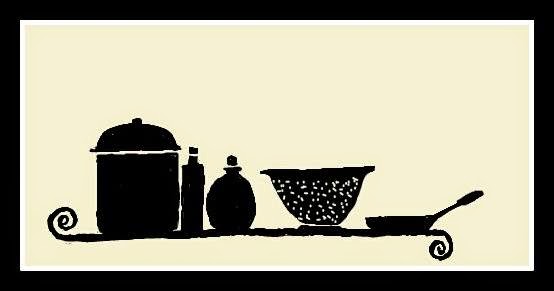 Containers offer a lot of options for innovation. I converted an old pickle jar I found languishing in my grandmothers house into a salt pot. Is sits near my stove top and reminds me of her every time I reach for the salt! Containers are something that no kitchen can do without and from the tiniest spice box to the biggest bin, everything you need offers an option to innovate. Look for recyclable or quirky alternatives to everyday containers, a beat up old bucket can be used to store rolled up dish towels in colors that coordinate with your walls or floor. Old biscuit tins offer attractive options to keep things in. Look out for those quaint pepper shakers that come in pairs - I remember a pair of owls I was gifted once. Older designs are sometimes the most classic ones. There is no better place to find "cool" storage items for your kitchen than an antique/junk store or your city’s equivalent of Mumbai’s Chor Bazaar. Go on the hunt, include friends and make a day of it, you won’t believe all the interesting things you'll find!
I have been slowly settling into my new house. Getting to know my new kitchen. It just about getting to feel… comfortable. Like a new pair of jeans that need an acid wash to feel lived in, I feel like it needs more... more than the functional aspect of equipment etc. I realised when we were setting up the studio, that for all the effort that we put into personalizing the rest of our home, we rarely take the time to focus on decorating the kitchen! It is after all, central to any home, a meeting place for families to come together and share food, fun, joys, woes, love and laughter. Why leave it to feel utilitarian, cool... sterile? Why not put in a little effort to make it perfect? And the best part is, you don't need to move into a new home to do this, you can do up or redo your existing kitchen, RIGHT NOW!
I usually begin with a theme, a unifying idea that is a recurrent element. It could be as simple as a colour or a color palate. With the studio we wanted a feeling of cosy, so we chose wood, opaque glass and wrought iron. It looks lovely as it is but also allows for additional decor to match a variety of themes. But a home kitchen allows for something more characteristic of the cook or the people in it? Depending on your bent of mind you could choose to go retro, modern, avant garde... Your theme could revolve around a cuisine or you could even pick an ingredient - fruit and vegetables can be very colourful.. spices or nuts offer muted monochromatic themes. A favourite drink or food you love, coffee, chocolate, beer, olives, candy… just look around you, something will strike a chord! Carry your choice of theme into different aspects of your kitchen. In the first home we owned, I had gone with an Italian cafe theme, with cafe style chairs and a daily specials board and all. This time I am seriously thinking of chillies as a theme.Your walls can do more than hold up the roof. Walls are an empty canvas waiting to be filled.... Pictures offer the easiest wall art and there are a myriad ways to get some. Retro advertisements for cooking ingredients, framed prints of food and ingredients, old botanical drawings of cooking plants offer interesting options. Look for old botanical textbooks and magazines at second hand bookstores, tear pages out and frame. Photos, in collages or individually framed and hung on blank wall space are my favourite way to dress up walls. Blue china plates can add bright contrast to drab white walls, mounted in clusters, or rows above a window or down the side of a cabinet. Old kitchen ware can be attractive on top of a cupboard or windowsill and infuse a touch of cosyness that only old things can. Use collections of postcards, match boxes, coasters, or stirrers by creating collages and framing them for a wall.Make it a DIY project, get to work with your digital camera - take pictures of ingredients, the food you cook, your family and friends enjoying good food - and frame them, you could even add recipes alongside. Paint your own wall art. OR use favourite recipes as wall paper! Print recipes out onto translucent paper or cut interesting recipes out of magazines rub the reverse of each with a piece of sandpaper and paste to the wall. Seal by applying a coat of clear poly-acrylic paint with a broad paint brush. Ensure that if you are decorating around a theme, such as food, French café style or even wine, the images you hang on your wall are in keeping with the theme of your kitchen. I know framed foodles are going to be a BIG part of the decor in my new kitchen!
Glass bottles are available in a variety of shapes; triangular, curvy square even stars and doughnuts, look around! Decorative bottles, either empty or filled with all sorts of appealing combinations of herbs, olives, chillies, berries and lemons are all the rage. Besides tops of kitchen cupboards, glass-front cabinets, and counter tops place these in small arrangements in varying the shapes, sizes, and colours on windowsills, they’ll catch light passing through and create prisms of colour. You could even create your own displays, recycle wine bottles and use them for oils, vinegars and liquid ingredients, use a tall bottle to stand spaghetti in, arrange other pastas or even dals in layers in a large pickle jar and place in a corner. Create a spicy pot pourie with coffee beans, whole spices and herbs, place it in a glass jar that has lost its lid and cover with a net trimmed with beads. Not only will the whole spices look immensely attractive but and occasional shake will release its aroma or simmer spoonfuls in a covered pot when you want added atmosphere, when your guests arrive uncover the container and release a cloud of fragrance!
The kitchen is where we grab our first cuppa as we look forward to a new day, pencil appointments onto the calendar to jostle with birthdays, anniversaries homework and festivals, help kids grow into good people, and like it or not, this IS where the party always ends!! Oh, and did I mention cooking? This is where women spend one third of their waking hours stirring love into food hoping for the high praise of “mama makes nice food” and plates scraped clean! It deserves attention!
GYAAN
How to Buy a Foodle illustrated by me.
The kitchen is where we grab our first cuppa as we look forward to a new day, pencil appointments onto the calendar to jostle with birthdays, anniversaries homework and festivals, help kids grow into good people, and like it or not, this IS where the party always ends!! Oh, and did I mention cooking? This is where women spend one third of their waking hours stirring love into food hoping for the high praise of “mama makes nice food” and plates scraped clean! It deserves attention!
 |
| Food poetry and or quotations can be framed and put up. This micropoem is by me .... |
GYAAN
How to Buy a Foodle illustrated by me.


