Although Dhansak is a very homestyle meal, it was my first ever taste of Parsi food and has stayed a favourite comfort food ever since. When I was a boarder (at Mayo girls in Ajmer) I looked forward to outing Sundays when my local guardian Gul Marfatia would come take us out for the day. The collective illusion we students liked to live in at the time was that we were imprisoned in MCP (Mayo College Prison)! Deprived of freedom, tuck, meeting boys… you get my drift I am sure…
So you can imagine what a highlight it was to visit Gul Aunty on our monthly outing Sundays. The patterns of these visits typically began with us spilling into her house and settling down in various sections of it as Kishan, their house keeper and long time retainer came around with a tall glass of chilled Lemon Barley water (a local brand that we still ask for from people visiting Ajmer) to tide us through the hungry minutes until lunch was laid.
The Parsis are a community of Indians decended of Persian Zoroastrians that immigrated to the Indian subcontinent over millennia ago, fleeing persecution by the Turks. A rather charming legend attached to their arrival has it that when they arrived on the shores of Sanjan in Gujarat the sent an emissary to the local ruler for permission to settle there. He replied by sending them a brimming glass of milk to illustrate that there was no space for them and diplomatically turn them away. The Parsis replied by stirring in sugar and returning the glass indicating that they would assimilate into the culture of the country very smoothly. Just like the sugar dissolved in the milk without the glass overflowing. The Rana was convinced and the community made India its home. And not only did they assimilate into the country, they enriched it like sugar enriches milk, contributing to the culture and development of India in a multitude of notable ways, over the ages, not the least of which was with their food.
Food is intrinsic to Parsi culture and a richly layered cuisine has evolved over the years. Into the intrinsic richness of traditional Persian cuisine that they brought with them, rich with dry fruit, nuts, rose water, a proclivity toward pilafs and dishes that combined meat and vegetables were stirred the seafood, vegetables and coconut and spices that were the mainstays of the local Gujarati and Maharashtrian cuisines in their new home country.
But the Sunday lunch at Gul Aunty’s was always Dhansak, which is the name of the main dish as well as the whole meal built around it. Dhansak is not a festive dish. It is actually served when a family is coming out of mourning. But it is also often served as a special Sunday meal mandatorily washed down with a chilled beer or two and followed by a long snooze. Centred around a stew of meat cooked with lentils, vegetables and Dhansak masala and simmered until the lentils and vegetables have disintegrated and the meat is falling off the bone, Dhansak is traditionally served with caremelised brown rice, kachumber and kebabs or fried meatballs (wether you do all of that is up to you). The meatballs are usually made of Mince meat, but I could not get that the day I made it.
Dhansak Recipe Time: 1 hour 20 mins, Serves 6
This recipe is a combination of the recipe my friend Kalyan of the blog Finely chopped shared (It is Mammas his wife’s grandmothers recipe), the recipe Kishan shared over a busy phone line for Dhansak made in Gul Aunty’s house and a few adjustments to the whole made by me to match my memory of how it tasted. The cachumber of finely chopped onion, tomato and coriander distinctively flavoured with Kolah’s vinegar, the sugarcane vinegar that is characteristic to Parsi cuisine which helps cut through the meatiness of the dal.
For the Dhansak
500 g mutton/chicken
125 g Tur daal
2-4 small brinjals quartered
1 c pumpkin chunks
1 onion diced
1 large potato, cubed
1 tsp methi seeds
3-4 tsp Motilals Dhansak masala
1 tsp turmeric powder
1 tsp chilli powder
1.5 teaspoon ginger garlic paste
Salt
1.5 tsp ghee
2 tablespoons chopped coriander leaves
Method:
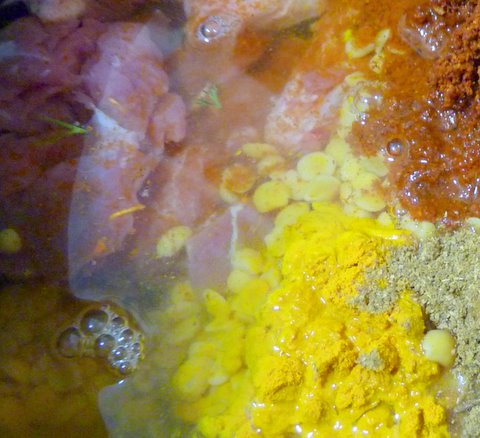
Wash and soak the toor daal for half an hour in two cups of water in a large preasure pan, then add the cleaned mutton, vegetable and all the spices to it. Place on a flame and heat. When it comes to a boil cover cooker with the cover and shut. Cook on a high flame until the cooker has whistled thrice. Then lower flame and cook for half an hour after that. Resist the temptation to open the cooker until it cools and the preassure is released. The dal and vegetables should have disintegrated completely or at least be cooked to a mush and the meat should be falling off the bone. Add a bit of water to loosen the daal if required and churn with a wire whisk so only the mutton pieces remain whole. Add coriander leaves and allow the mixture to simmer for five minutes stirring gently so no lumps are formed. Add the butter or ghee in, take off flame and leave dhansak covered for five minutes so that all the flavours infuse in.
For the Caramelised rice or Vagharela chawal
2 ½ c rice
2 onions, sliced
2 " cinnamon stick
8 cloves
6 cardamoms
salt to taste
2 tbsp ghee
Wash and soak rice for 20 mins, drain and keep in a strainer for another 20 mins. Heat ghee add spices and then onions and fry till onions are well browned. Add the washed rice and salt and saute for 3-4 mins. Add boiling water to cover rice (by an inch). Bring to boil and then lower heat and simmer with the pan half covered till holes appear in the surface. When water has more or less dried out, cover completely and lower flame so steam can build up in the pot. Put off flame after 5-6 mins and allow the rice to steam cook till done.
For the Kachumber
The kachumber consists of onions tomatoes, cucumbers, corriander and green chillies chopped fine, mixed together mixed together. Salt and lemon juice are added and the whole is set aside to marinate in its own juices.
For the Prawn Kebabs (Kolmi Na-Kevab)
300g Prawns, shelled and deveined
1 tsp Cumin seeds
2-3 Green Chilies, finely chopped
1 onion, finely chopped
1 head garlic, finely chopped
1 tbsp coriander leaves
Turmeric powder 1/2 tsp.
Worcestershire sauce 1 tbsp.
Egg 1 no.
Oil For deep frying
Salt and pepper As per required
Wash and season prawns with salt and rset aside for atleast 30 minutes. Then wash again and pound or whizz coarsely in a blender. Add them and the rest of the ingredients except the eggs to mortar or blender and pound or pulse again until well blended but coarse. Knead in the egg and make into small balls. Deep deep fry for 6-10 minutes, until golden brown. Serve hot.